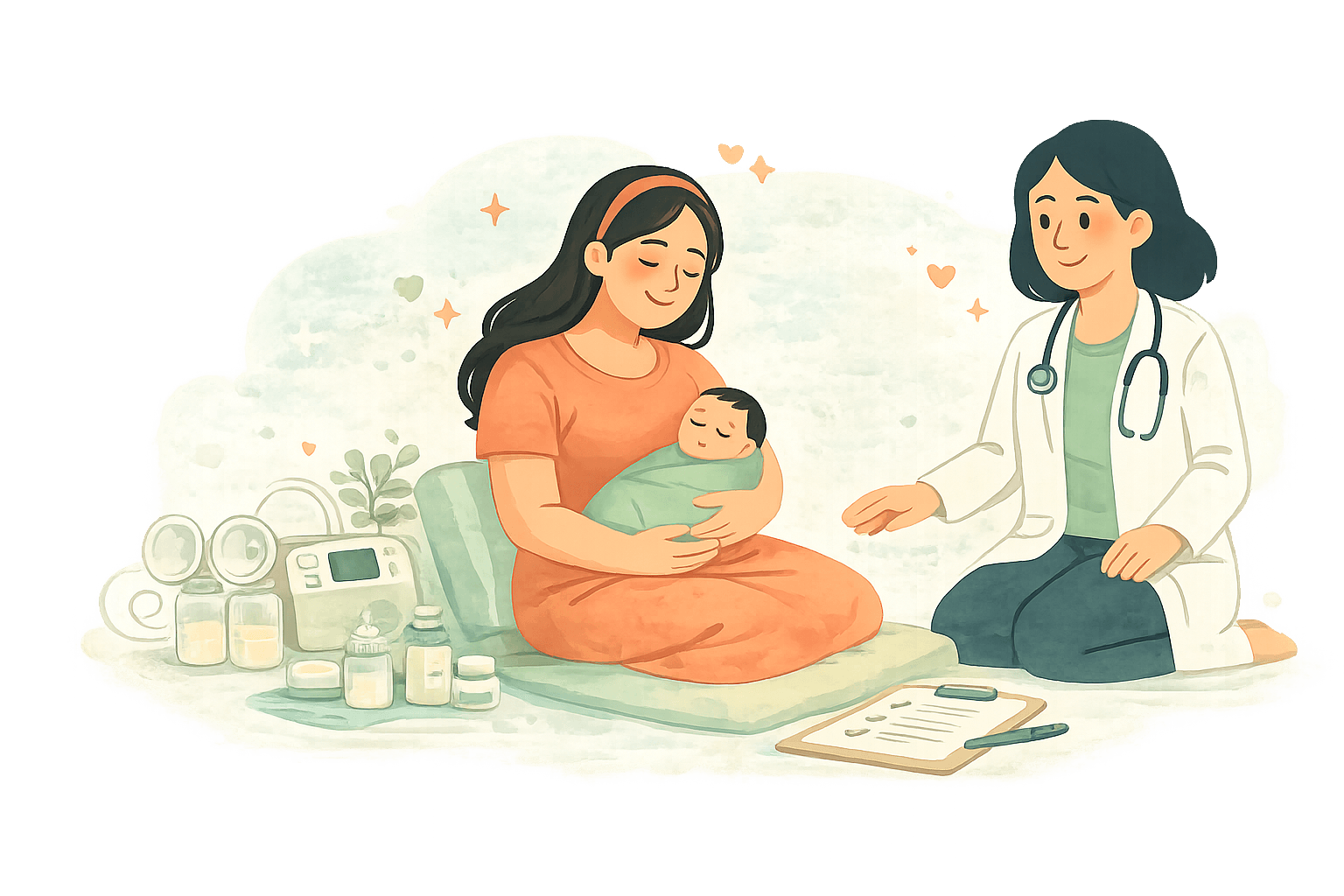
Postpartum Care
Get comprehensive, family-centered support after birth, including lactation consultants, postpartum doulas, and newborn care specialists, to make recovery smoother. Postpartum providers help with feeding plans (breast or chest, pumping, combo), healing and pelvic floor recovery, sleep strategies, soothing techniques, partner support, and early mental-health screening for baby blues and postpartum mood changes. Many offer in-home or virtual visits, flexible schedules (days, evenings, overnights), and coordinated care plans tailored to your goals and cultural preferences.
Available specialists
Loading…
Postpartum Support Services
Lactation Support
Expert guidance from certified lactation consultants to help establish successful breastfeeding and address any challenges.

Recovery Support
Physical and emotional recovery support including healing guidance, exercise recommendations, and mental health resources.
Newborn Care
Professional guidance on newborn sleep, feeding schedules, development milestones, and establishing healthy routines.
Frequently Asked Questions About Postpartum Care
What is postpartum care and why is it important?
Postpartum care encompasses the physical, emotional, and practical support a new parent needs after birth — typically for the first 6–12 weeks. It includes recovery from birth, breastfeeding or bottle-feeding support, mental health monitoring, and newborn care. Adequate postpartum support is strongly associated with lower rates of postpartum depression and better long-term outcomes for both parents and infants.
What does a postpartum doula do?
A postpartum doula helps at home after your baby arrives. They assist with newborn care (feeding, soothing, safe sleep), light household tasks, meal prep, sibling care, and emotional support for new parents. They can work daytime or overnight shifts and typically serve families for several weeks after birth.
How long does postpartum recovery take?
Physical recovery from an uncomplicated vaginal birth typically takes 6–8 weeks; recovery from cesarean birth often takes longer (8–12 weeks or more). Emotional adjustment, sleep recovery, and full pelvic floor rehabilitation can take several months to a year. Ongoing support throughout this period is beneficial.
What is the difference between baby blues and postpartum depression?
Baby blues are mild mood swings, tearfulness, and anxiety that affect up to 80% of new parents and resolve within 2 weeks. Postpartum depression (PPD) is more intense, lasts longer (beyond 2 weeks), and includes persistent sadness, inability to function, or thoughts of self-harm. PPD affects about 1 in 8 new mothers and requires professional support.
Popular cities for Postpartum Care
Explore local provider directories for families searching nearby.