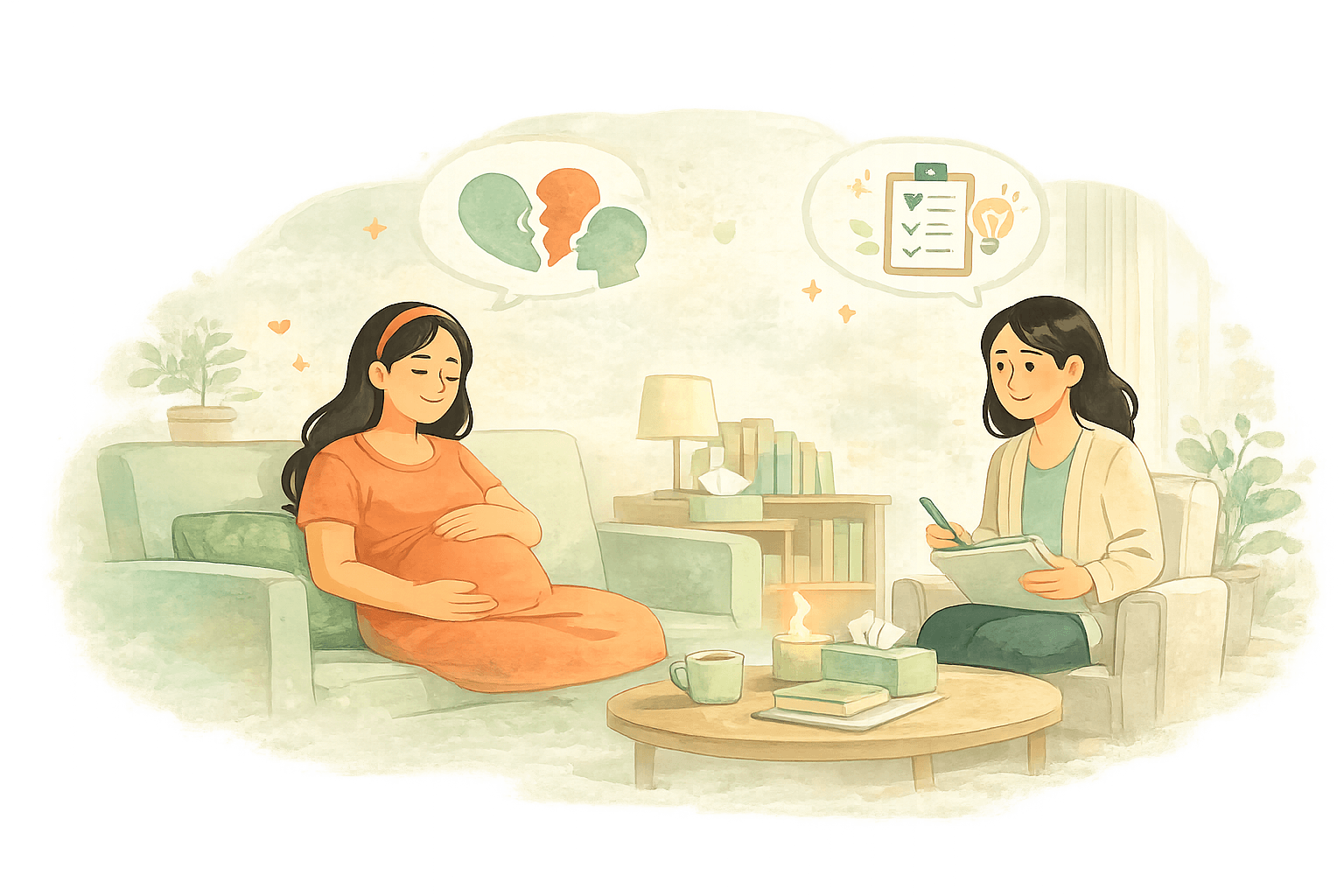
Mental Health Support
Connect with therapists and mental health professionals who support emotional wellbeing during pregnancy and postpartum.
Available mental health providers
Loading…
What to Expect from Mental Health Support
Perinatal Counseling
Support for anxiety, stress, and mood changes through pregnancy and postpartum transitions.
Emotional Resilience
Tools and strategies to strengthen coping skills and improve day-to-day wellbeing.
Compassionate Sessions
Safe, supportive care with professionals experienced in pregnancy and new parent mental health.
Frequently Asked Questions About Perinatal Mental Health
What is perinatal mental health?
Perinatal mental health refers to emotional and psychological wellbeing during pregnancy (prenatal) and the first year after birth (postpartum). Perinatal mood and anxiety disorders (PMADs) are the most common complication of pregnancy and childbirth, affecting approximately 1 in 5 pregnant and postpartum people.
What are the signs of postpartum depression?
Symptoms include persistent sadness or emptiness, loss of interest in activities, difficulty bonding with your baby, extreme fatigue, changes in sleep or appetite, irritability or anger, feelings of worthlessness or guilt, and in severe cases, thoughts of harming yourself or your baby. These symptoms lasting more than two weeks after birth warrant professional evaluation.
Is it normal to feel anxious during pregnancy?
Some anxiety is normal during pregnancy. However, when anxiety is persistent, overwhelming, or interfering with daily life, it may be perinatal anxiety, a treatable condition. Approximately 15-20% of pregnant people experience clinically significant anxiety. Talking to a perinatal mental health specialist can help.
What therapy approaches are used for perinatal mental health?
Evidence-based approaches include Cognitive Behavioral Therapy (CBT), Interpersonal Therapy (IPT), and mindfulness-based therapies. Many perinatal mental health specialists also offer medication management in coordination with your OB or midwife when appropriate. Teletherapy options are widely available for postpartum parents.
Popular cities for Mental Health Support
Explore local provider directories for families searching nearby.